
Feeding Your Baby & Toddler
Feeding your child is about more than food. It is a chance to bond, build healthy habits, and help your child grow.
Here is simple guidance from birth through the toddler years.
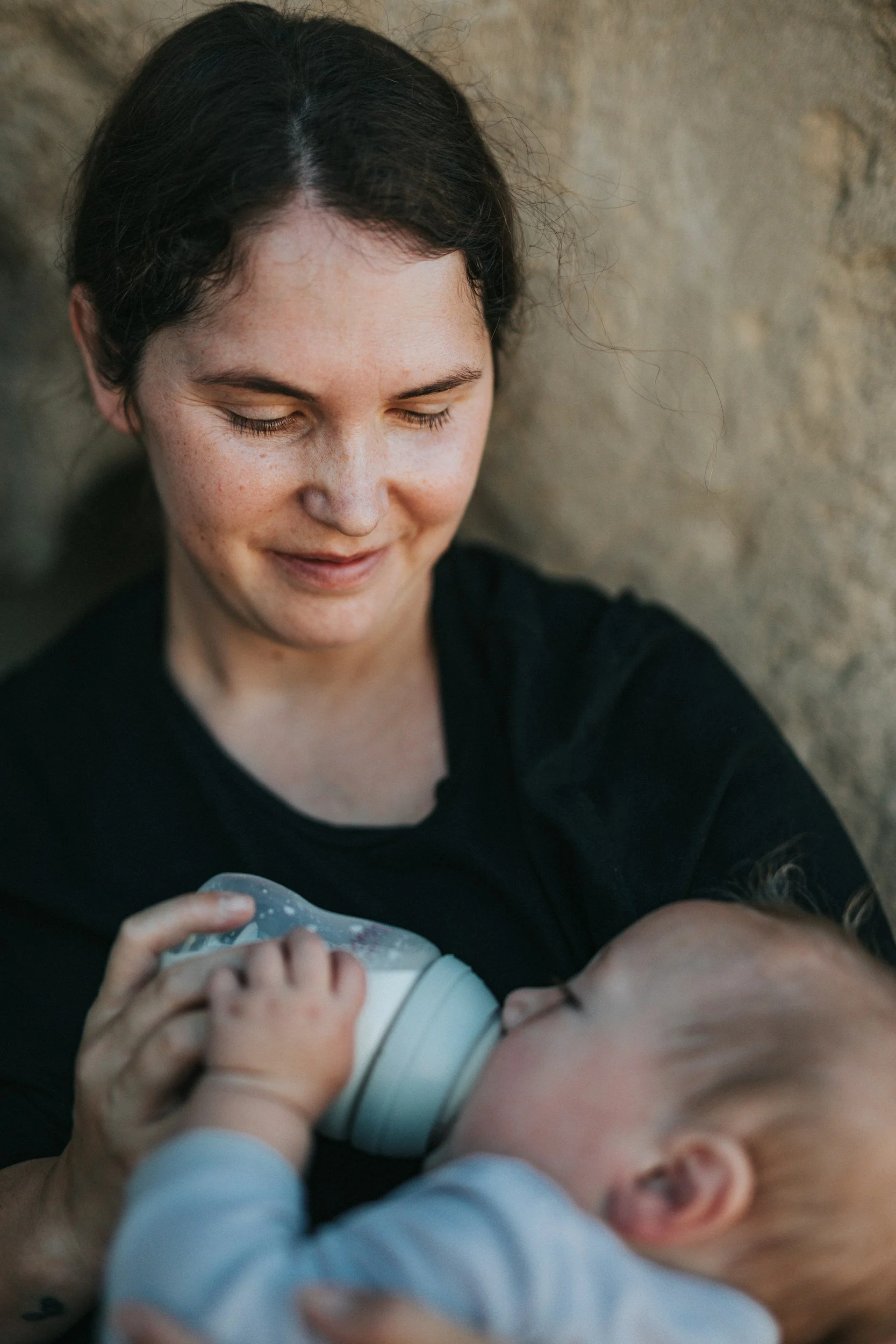
Why it matters
Good food fuels your child's fast-growing body and brain.
Early eating habits help shape healthy habits for life.
Mealtimes are bonding time. Talking and connecting at meals helps your child feel safe and loved.
The first 6 months
Breast milk or formula is all most babies need. For about the first 6 months, breast milk is all most babies need. Formula is a healthy choice too. What matters most is that your baby is fed and growing.
Breastfed babies need vitamin D drops every day. Ask your doctor about vitamin D and iron.
Feed when your baby is hungry. Watch for cues like rooting, sucking, or putting hands to mouth.
Starting solid foods (around 6 months)
Most babies are ready around 6 months, and not before 4 months.
Signs your baby is ready: good head control, sits with support, and shows interest in food.
Start with small tastes from a spoon while your baby sits up
Offer iron-rich foods first, like baby cereal with iron or pureed meats.
Keep breast milk or formula going alongside solids.
Food allergies: new advice
You do not need to wait to offer common allergy foods. Offering them early can lower the chance of allergies.
Once your baby handles a few first foods, offer foods like egg and peanut in baby-safe forms. No whole nuts.
Offer each new allergy food on its own, then watch your baby. Keep offering it about 3 times a week.
If your baby has bad eczema or a known egg allergy, ask your doctor about starting peanut early, around 4 to 6 months.
Keep your child safe at meals
No honey before 12 months. It can make babies very sick.
No cow's milk as a main drink before 12 months. Yogurt and cheese are fine.
Cut food into small, thin pieces to prevent choking.
Skip choking hazards like whole nuts, popcorn, hot dogs, hard raw veggies, and whole grapes.
Always stay with your child while they eat.
Toddlers and picky eating
Picky eating is normal. Your toddler is learning to be independent.
Share the job. You decide which healthy foods to offer. Your child decides how much to eat.
Keep offering new foods, even ones they refused before. It can take many tries.
Eat together when you can. Children copy what they see.
What you can do now
Offer a few healthy choices at each meal, and let your child pick.
Make water and milk the main drinks. Limit juice.
Eat together as a family when you can.
Ask your Arbor team about WIC, which can help with healthy food and feeding support.
Learn more from trusted sources
We’re Here to Help
Get your child started with care at Arbor. Arbor Family Health provides ongoing support, education, and care every step of the way.